

How to Choose the Right Technology Stack for Your Website
When Planning a Website, most people focus on design and features first. But one of the most important decisions happens in the background the technology stack. It directly affects how your website performs, how easy it is to manage, and how well it can grow over time.
Choosing the right stack is not about picking the most popular tools. It’s about selecting what actually fits your project, your goals, and your future plans. A wrong decision here can lead to slow performance, higher costs, and constant technical issues later on.
Understanding What a Technology Stack Means
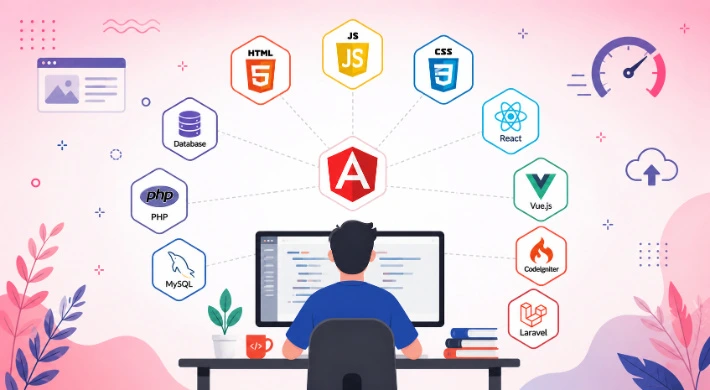
A technology stack is simply the combination of tools, frameworks, and languages used to build and run your website. It usually includes frontend (what users see), backend (how things work), and database (where data is stored).
For example, a website might use HTML, CSS, and JavaScript on the front end, with a backend like Node.js or PHP, and a database such as MySQL. Each combination works differently depending on the type of project. The key is not to choose randomly but to understand what your website actually needs.
Start with Your Project Requirements
Before choosing any technology, you need clarity about your goals. Ask simple questions:
Is it a basic business website?
Do you need an e-commerce platform?
Will users log in or interact with data?
A simple website doesn’t require a complex setup. On the other hand, a platform with user accounts, payments, or real-time features needs a more advanced stack. Starting with clear requirements helps avoid unnecessary complexity.
Focus on Performance and Speed
Performance should always be a priority. The technologies you choose directly affect how fast your website loads and responds. A heavy or poorly optimized stack can slow everything down, even if your design is perfect.
Lightweight frameworks, optimized databases, and efficient coding practices all contribute to better performance. A fast website not only improves user experience but also helps with search rankings. Choosing a stack that supports speed and efficiency from the beginning saves a lot of trouble later.
Scalability Matters for Future Growth
Your website may start small, but it should be ready to grow. As traffic increases or new features are added, your technology stack should be able to handle the load.
Some stacks are better suited for scaling than others. For example, certain backend technologies can manage large amounts of data and traffic more efficiently. Planning for scalability early prevents the need for major changes in the future, which can be costly and time consuming.
Ease of Maintenance and Development
A good technology stack should be easy to manage and update. If your system is too complex, even small changes can become difficult and expensive. It’s better to choose technologies that are widely used and well-documented. This makes it easier to find developers, fix issues, and keep your website updated. A simple and clean structure reduces long-term maintenance problems and ensures smooth operation.
Security Should Not Be Ignored
Security is another important factor while choosing a technology stack. Your website may handle user data, payments, or sensitive information. Using secure frameworks and regularly updated technologies helps protect your site from risks.
Outdated or unsupported tools can create vulnerabilities. That’s why it’s important to choose a stack that receives regular updates and has strong community support. Building with security in mind from the start avoids serious problems later.
Budget and Development Time
Different technologies come with different costs. Some require more development time, while others allow faster deployment. Choosing a stack that fits your budget and timeline is important.
For smaller projects, simpler technologies can get the job done efficiently. For larger platforms, investing in a more advanced stack may be necessary. Balancing cost, time, and performance helps in making a practical decision.
Choosing the Right Team Along with the Stack
Technology alone doesn’t build a great website the team behind it matters just as much. Even the best tools won’t help if they are not used properly. Working with experienced developers ensures that the chosen stack is implemented correctly. They can guide you on what works best based on your goals and help avoid common mistakes. A good team makes the technology work effectively for your business.
Conclusion
Choosing the right technology stack is a crucial step in building a successful website. It affects performance, scalability, security, and long-term growth. Instead of following trends, focus on what your website actually needs. A well-planned stack creates a strong foundation, making your website faster, more reliable, and easier to manage.
In the long run, the right decision at the beginning saves time, reduces costs, and supports steady growth as your business evolves.
